
Land FWI, end-to-end — powered by TSL-FWI
An integrated workflow — from data preparation to angle-dependent reflectivity — running on cloud-native infrastructure. TSL-FWI™ objective functions handle near-surface heterogeneity and unmodelled amplitudes, exploiting low-frequency content from the first iteration.
Design your XWI Land workflow
Sketch a rough scope of work. Move the controls to see how survey size, target FWI frequency and terrain shape the project price and delivery timeline.
Inputs
4 of 4 core FWI stages selected
Estimated run
Indicative figures — final scoping is based on full survey parameters.
How is the price built?
A fixed engagement fee plus a variable component that scales with maximum FWI frequency and survey area, and is then adjusted by target complexity, target depth and update style — these capture both compute and human time (parameterisation, QC, integration), with the human side usually dominating. Skipping pipeline stages reduces the variable part. Multi-survey merging and new-acquisition coordination add small fixed amounts. Interpretation bundles a Thinkonward deliverable on top of the FWI outputs.
See it in action
Real imagery (Highlander, south Louisiana) tied to the controls on the left — pick a stage and change a slider to see the example update. Click the maximise icon to expand it.
Maximum FWI frequency
20 Hz selected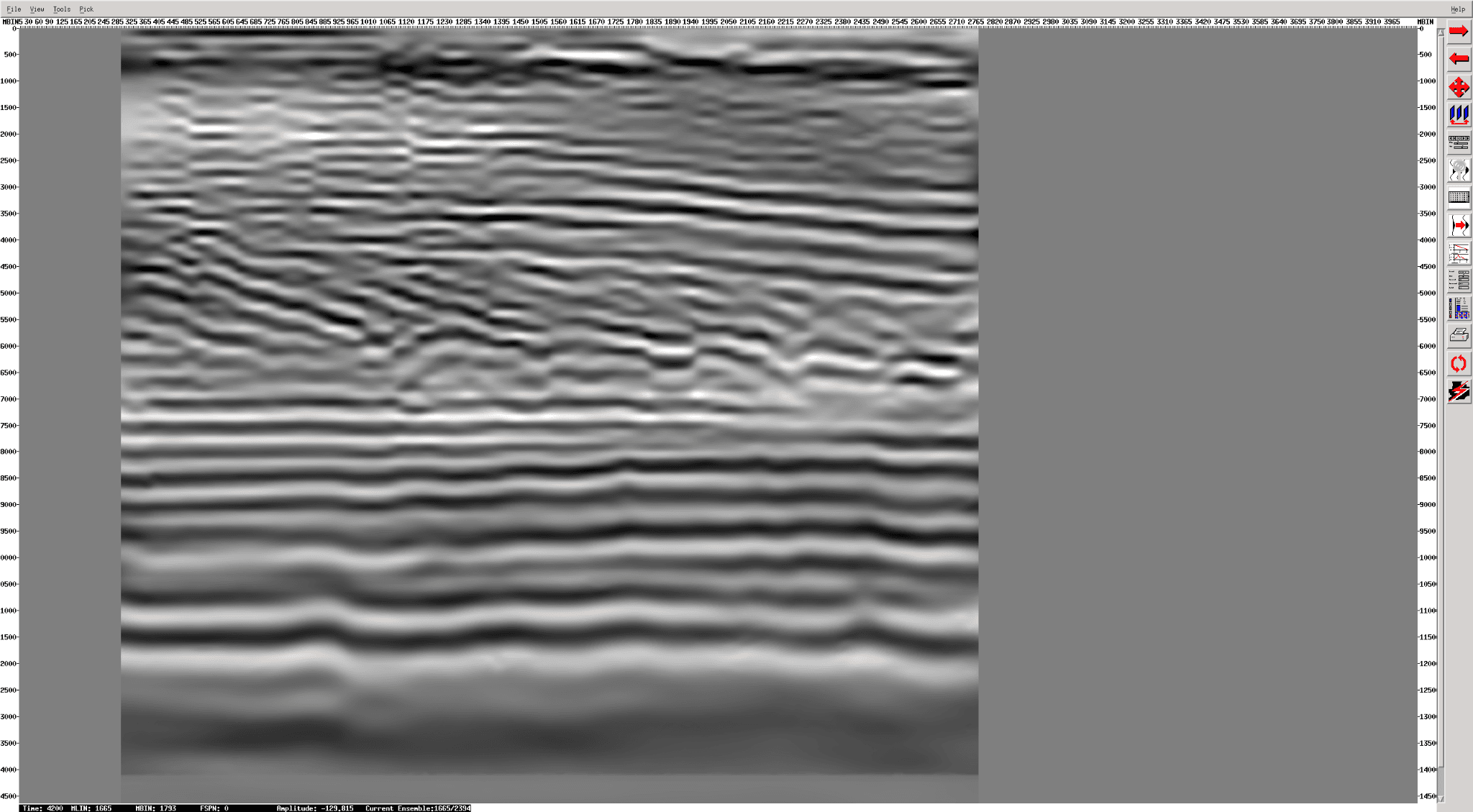
Closest available reference (16 Hz)